Posted in Yellowstone, National Parks, family adventure vacation, Family, family adventure, hiking. Posted 4 months ago
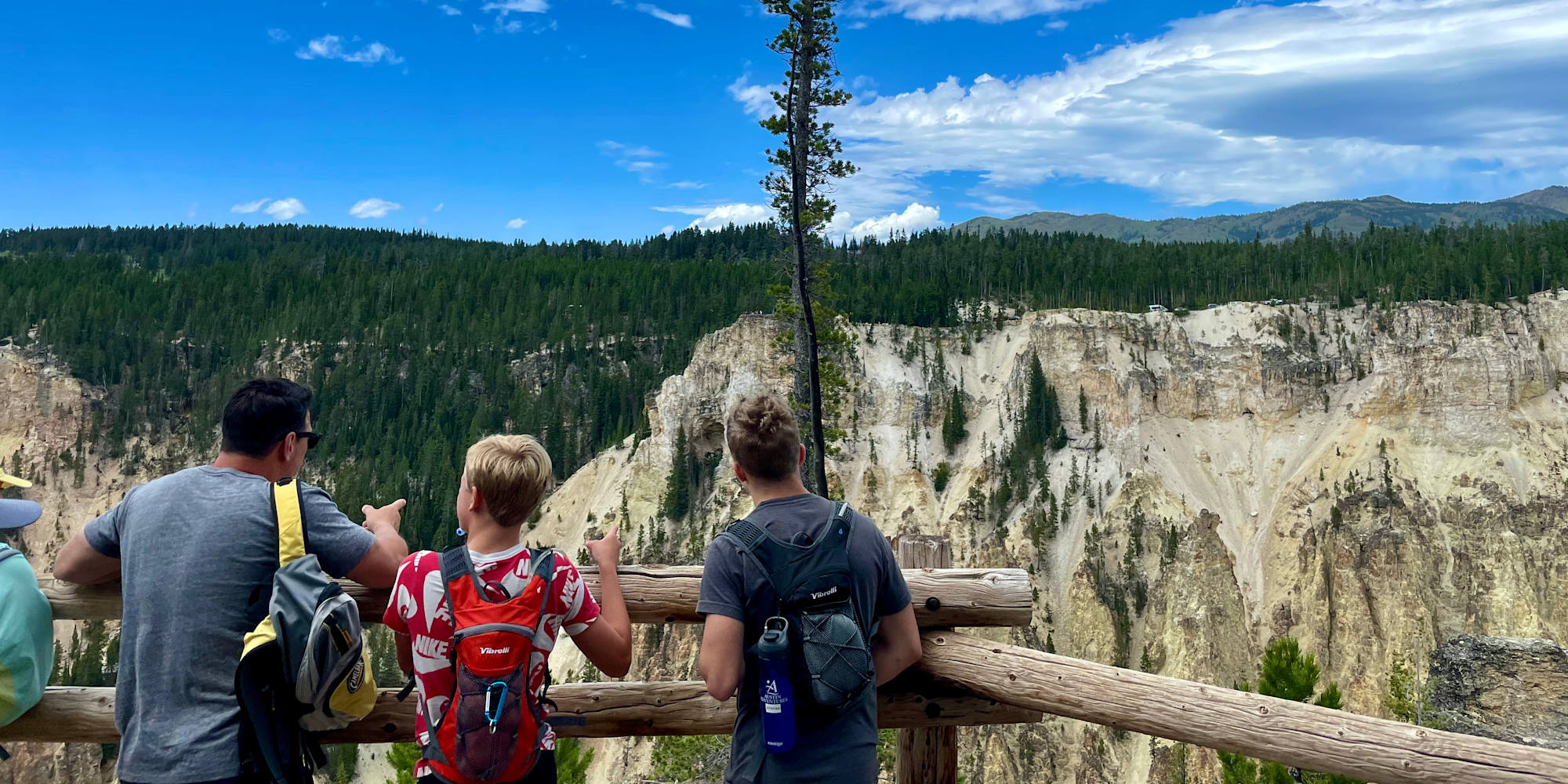
There’s something pretty special about hiking in Yellowstone with kids.
A trail is never just a trail here. It might lead to a geyser that rumbles like the earth is clearing its throat. It might pass a hot spring so colorful it looks painted on. It might open onto a lake, a waterfall, or a valley where bison are grazing in the distance.
And if you’re traveling with children, that sense of wonder comes built in.
Yellowstone is one of the best national parks for families because the landscape is active, surprising, and full of natural “wait, what is that?” moments. But it’s also a park that deserves thoughtful planning. It’s big. The weather changes quickly. Many trails sit at high elevation. Wildlife is truly wild. And in thermal areas, staying on boardwalks is not just a suggestion, it’s essential.
For the best hiking trails in Yellowstone National Park for kids and families, be sure to include Upper Geyser Basin, Grand Prismatic Overlook, West Thumb Geyser Basin, Storm Point, Trout Lake, Lone Star Geyser, Fairy Falls, Two Ribbons Trail, and Brink of the Lower Falls. Families should choose hikes based on distance, elevation gain, boardwalk safety, wildlife awareness, weather, restroom access, and how each trail fits into Yellowstone’s large driving loops.
In this guide, we’ll walk through the best Yellowstone hikes for kids and families by difficulty, scenery, wildlife potential, and family suitability. You’ll also find practical tips on when to go, what to pack, where to stay, and when a guided Yellowstone family trip can make the hiking experience smoother, safer, and a whole lot more fun.
Let’s find the trail that fits your family.
Best easy Yellowstone hikes for young kids and first-time visitors
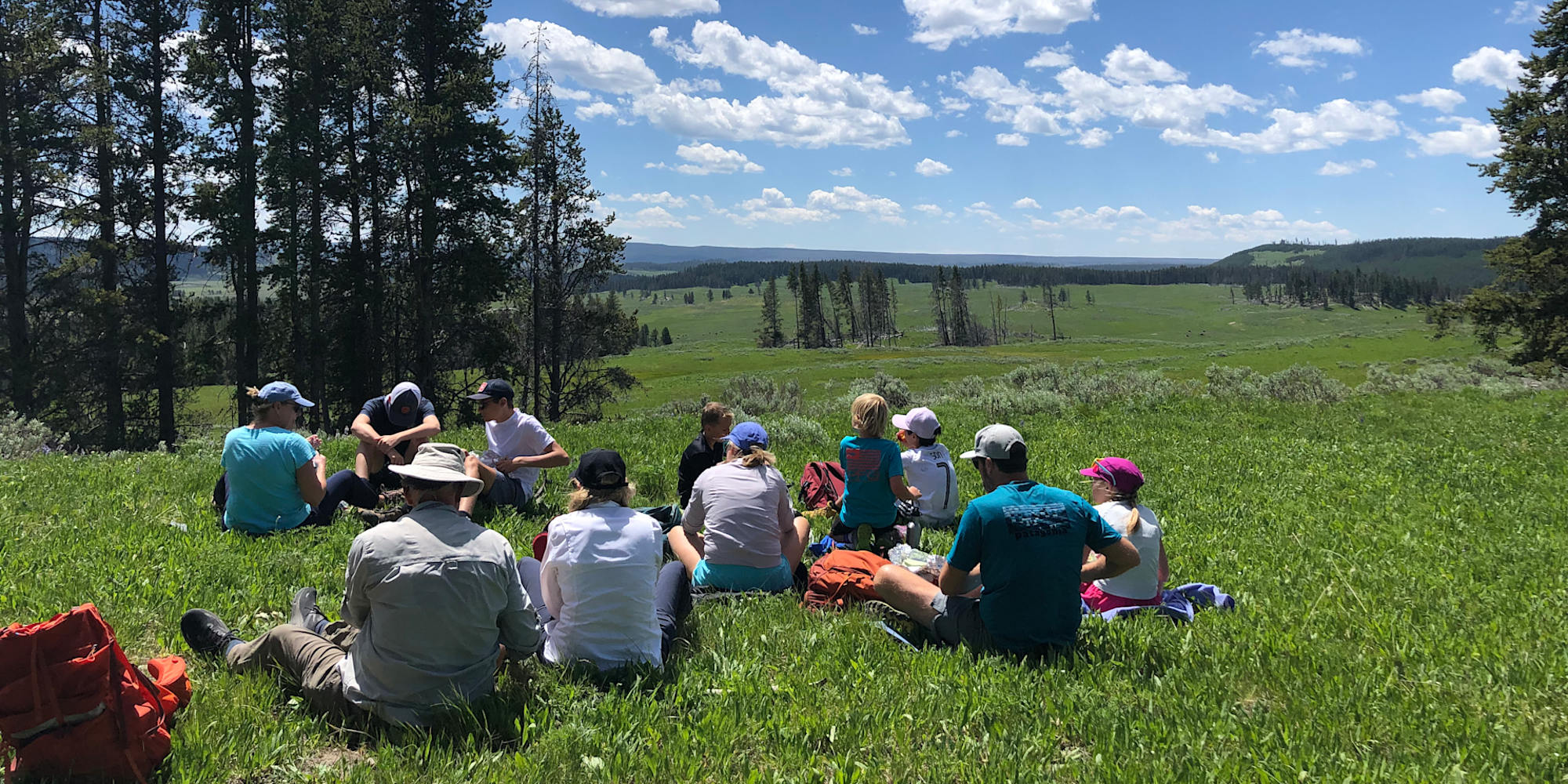
The best easy hikes in Yellowstone are short, scenic, and flexible. They give kids a chance to move their legs without asking too much of them, and they give parents and grandparents the confidence that the day is still manageable.
Easy does not always mean flat. Yellowstone’s elevation can make a short walk feel more tiring than expected, especially on the first day. Weather can shift quickly, and wildlife activity can change trail access. But these hikes are strong choices for families who want memorable scenery without turning the day into a forced march.
Upper Geyser Basin boardwalks
Best for: geysers, flexible walking, and younger children
Region: Old Faithful
Difficulty: easy
Family suitability: excellent
Scenery: geysers, hot springs, steam, boardwalks
Wildlife potential: low
The Upper Geyser Basin boardwalks are one of the easiest ways for families to experience Yellowstone on foot. Old Faithful is the famous centerpiece, but the surrounding boardwalks are full of smaller geysers, pools, vents, and steamy surprises.
This is a great option because families can choose their own distance. Walk a short loop with younger kids, or keep exploring with older kids who are still curious and energized. The landscape does a lot of the entertaining for you.
Family tip: Thermal areas are not places to wander off-trail. Keep kids close, hold hands with younger children, and stay on boardwalks at all times.
Grand Prismatic Overlook Trail
Best for: classic Yellowstone color and a big scenic payoff
Region: Midway Geyser Basin
Difficulty: easy to moderate
Family suitability: best for active kids who can handle a short uphill section
Scenery: hot spring views, steam, forest, boardwalk access nearby
Wildlife potential: low to moderate
Grand Prismatic Overlook is one of the best Yellowstone hikes for families because the reward is immediate and exciting. From above, Grand Prismatic Spring spreads out in bright bands of blue, green, yellow, and orange. It’s the kind of view that makes kids stop mid-sentence.
This trail is especially helpful for travelers who want the classic Grand Prismatic view without committing to a long hike. It also pairs naturally with nearby geothermal stops, and active families can continue toward Fairy Falls if everyone has the energy.
Family tip: Go early when possible. Parking, heat, steam, and crowds can all affect the experience. Bring water, snacks, and patience.
West Thumb Geyser Basin
Best for: boardwalk walking with Yellowstone Lake views
Region: Yellowstone Lake / West Thumb
Difficulty: easy
Family suitability: excellent
Scenery: hot springs, boardwalks, lake views
Wildlife potential: low to moderate
West Thumb Geyser Basin is a lovely family-friendly walk because it pairs thermal features with wide views of Yellowstone Lake. It feels different from the Old Faithful area: more open, more lakeside, and often a little calmer depending on timing.
The boardwalks make it approachable for families, and the scenery changes often enough to keep kids engaged. This is a nice place to reset the day if everyone needs something scenic but not too strenuous.
Family tip: Use this stop when your family needs a shorter walk with a big sense of place.
Two Ribbons Trail
Best for: a quiet nature break near the Madison River
Region: near the West Entrance / Madison River area
Difficulty: easy
Family suitability: strong for younger kids
Scenery: boardwalk, river corridor, lodgepole pine, fire recovery landscape
Wildlife potential: moderate
Two Ribbons Trail is often overlooked, which is part of its charm. This is a gentle option near the Madison River corridor, with scenery that feels quieter than Yellowstone’s headline stops.
This is a nice family choice if you want something softer than a major hike. It can also work well when entering or exiting through West Yellowstone.
Family tip: Not every kid-friendly hike needs a famous landmark. Sometimes the best trail is the one that lets everyone breathe, move, and reset.
Best family hikes for geysers, hot springs, and boardwalks
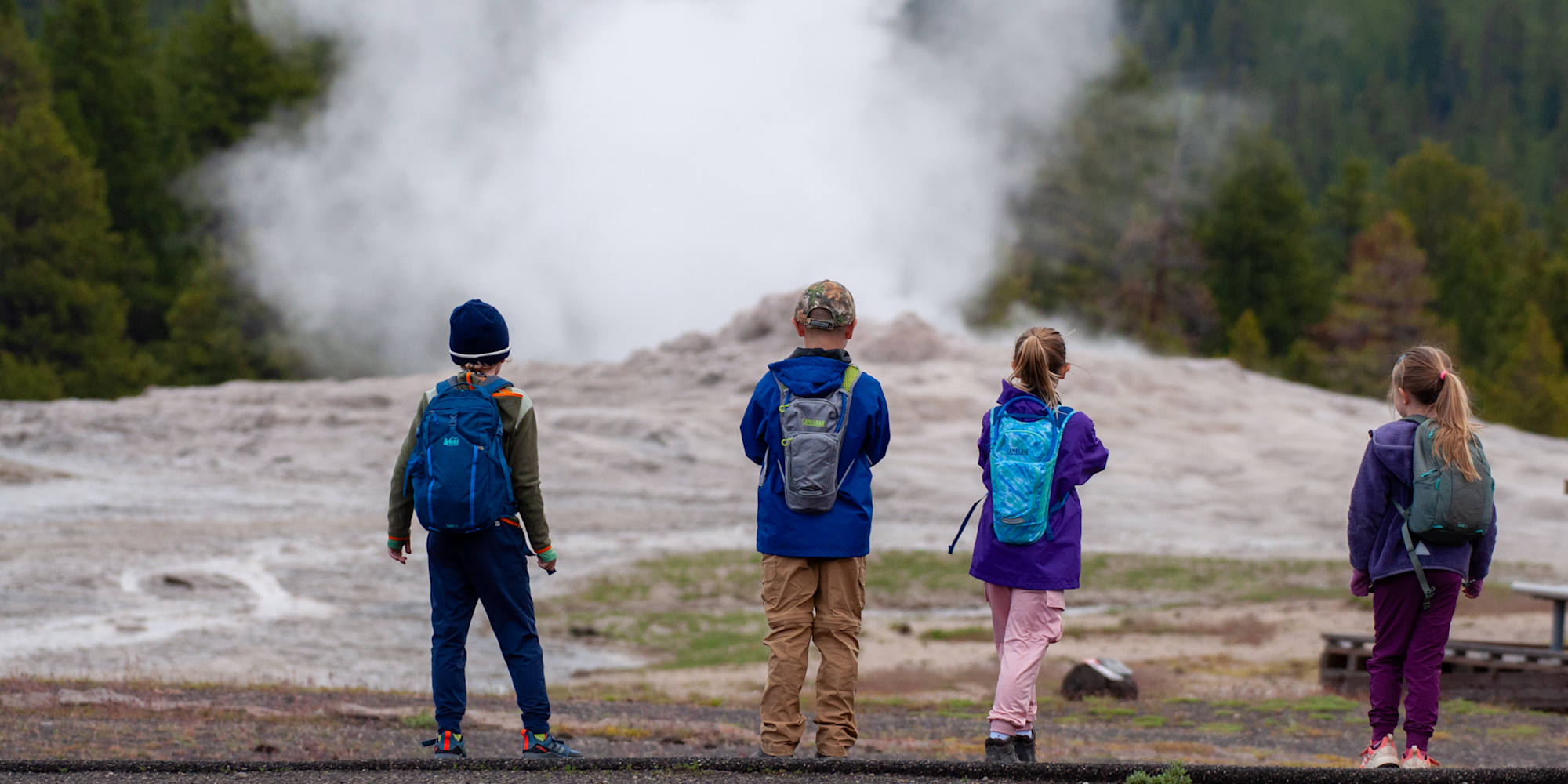
Yellowstone’s thermal areas are often the biggest hit with kids. Geysers erupt, mud pots bubble, steam drifts across the trail, and the ground feels alive in a way that sparks natural curiosity.
These are also the places where safety matters most. Keep children close, stay on boardwalks, and make sure everyone understands that thermal features are beautiful to look at but dangerous to touch or approach.
Mammoth Hot Springs Terraces
Best for: boardwalks, geology, and a northern Yellowstone family day
Region: Mammoth Hot Springs
Difficulty: easy to moderate depending on route
Family suitability: strong, with some stairs and walking
Scenery: travertine terraces, boardwalks, historic Mammoth area
Wildlife potential: moderate, especially around the broader Mammoth area
Mammoth Hot Springs is one of Yellowstone’s most memorable family stops because it looks so different from the geyser basins. The terraces feel sculpted, layered, and constantly changing.
Families can explore the lower terraces, upper terraces, or a shorter section depending on time and energy. The key is pacing. There can be more walking than families expect, and some sections include stairs.
Family tip: Pair Mammoth with a picnic, a restroom stop, or a slower afternoon. This area can be fascinating, but kids may need breaks.
Norris Geyser Basin
Best for: older kids interested in geology and dramatic thermal features
Region: Norris
Difficulty: easy to moderate boardwalk walking
Family suitability: best for school-age kids and teens
Scenery: geysers, steam vents, colorful thermal features
Wildlife potential: low
Norris Geyser Basin can feel wilder and more dramatic than some other thermal areas. It’s a good fit for families with older kids who enjoy science, geology, and landscapes that feel a little otherworldly.
Because boardwalks and thermal safety are so important here, this area is better for kids who can follow instructions consistently.
Family tip: Give kids a “thermal detective” mission: look for steam, color changes, bubbling water, mineral deposits, and signs that the ground is active.
Lone Star Geyser Trail
Best for: a quieter geyser hike
Region: Old Faithful area
Difficulty: easy to moderate
Family suitability: good for active families comfortable with a longer walk
Scenery: Firehole River, forest, geyser destination
Wildlife potential: moderate
Lone Star Geyser Trail is a wonderful family hike for kids who can handle more distance but may not be ready for steep climbs. The route has a quieter feel than the main Old Faithful boardwalks, and there’s something fun about hiking to a geyser instead of simply arriving by car.
Because geysers run on their own schedule, patience is part of the fun. Bring snacks, layers, and a flexible attitude. Even if you miss the eruption, the walk can still be a family win.
Family tip: Make this hike feel like a mini expedition. Give kids a snack stop, a river-view pause, and a goal to look forward to.
Best Yellowstone hikes for waterfalls, lakes, and wildlife potential
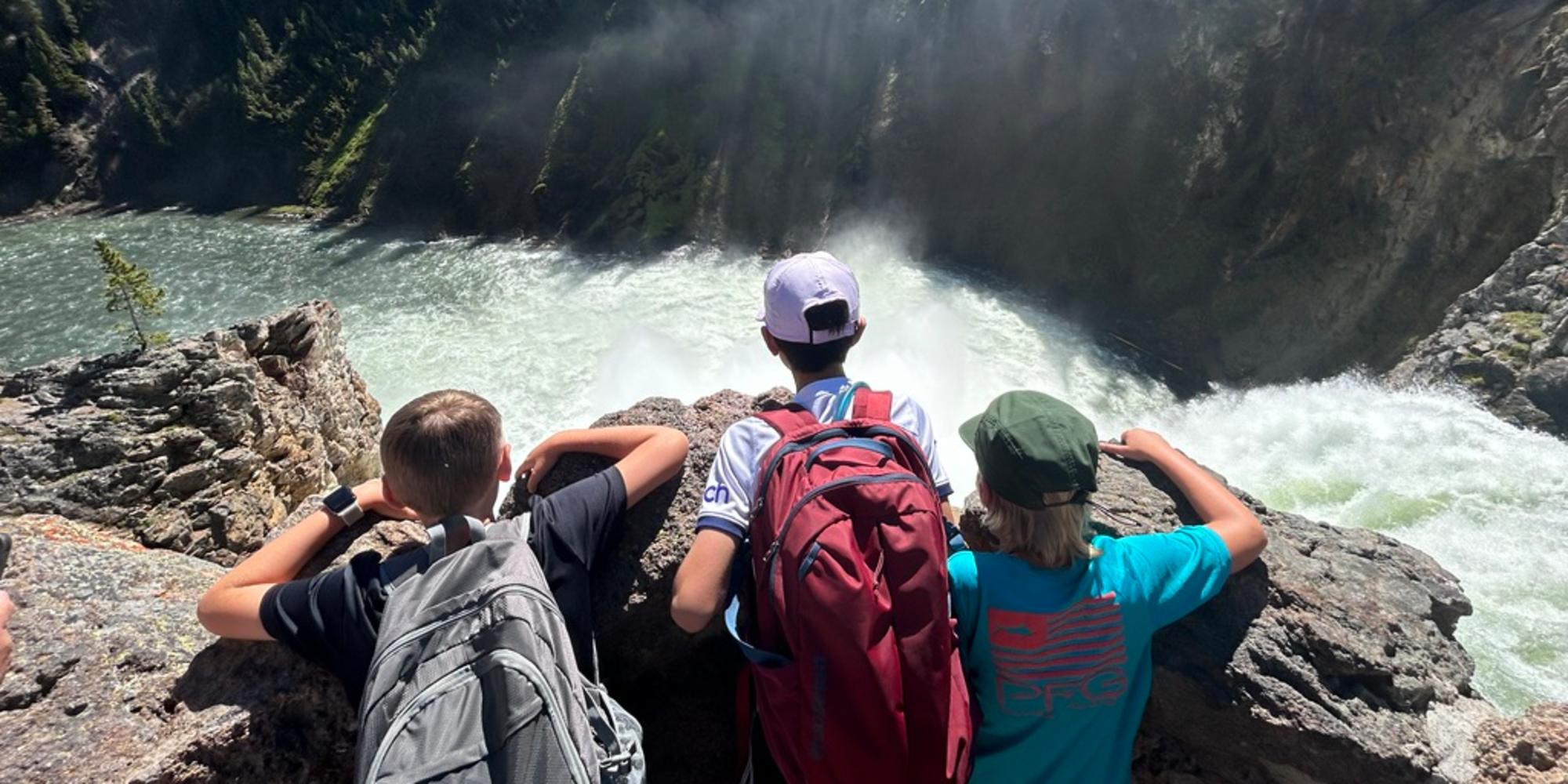
For many families, the best Yellowstone hikes have a clear reward: a waterfall, lake, wildlife valley, or view that gives kids a reason to keep going.
These hikes work especially well for families with school-age kids, active teens, or multigenerational groups who want a bit more adventure while staying realistic about distance and effort.
Fairy Falls Trail
Best for: waterfall payoff and Grand Prismatic add-on views
Region: Midway Geyser Basin
Difficulty: moderate
Family suitability: best for active families with older kids
Scenery: waterfall, forest, thermal basin views
Wildlife potential: moderate
Fairy Falls is one of Yellowstone’s most rewarding family hikes when your crew is ready for a longer outing. This is a strong choice for families who want a half-day hike that feels like a real adventure. You get forest walking, a waterfall destination, and the option for one of Yellowstone’s most famous views from the Grand Prismatic Overlook.
Family tip: This is not the hike to start late with tired kids. Begin early, pack lunch or hearty snacks, and know your family’s turnaround point before you go.
Storm Point Trail
Best for: lake views and a gentler nature trail
Region: Yellowstone Lake
Difficulty: easy to moderate
Family suitability: strong when trail conditions are favorable
Scenery: forest, meadow, shoreline, lake views
Wildlife potential: moderate
Storm Point is a great family trail when you want something scenic but not overly demanding. It usually offers a nice mix of forest, meadow, and lake scenery, giving kids variety without a major climb.
Because the trail sits in wildlife habitat, families should check current conditions before heading out. Yellowstone trails can close temporarily for bear activity, nesting birds, weather, or other safety reasons.
Family tip: This is a good choice for a calmer day when everyone still wants trail time but not a big push.
Trout Lake Trail
Best for: short hike with a peaceful lake payoff
Region: Northeast Yellowstone, near Lamar Valley
Difficulty: short but uphill
Family suitability: good for active kids
Scenery: forest, lake, mountain setting
Wildlife potential: moderate to high in the broader Lamar Valley region
Trout Lake is short, but the initial climb can feel punchy, especially for little legs. The reward is a quiet lake setting that feels tucked away from the road.
It’s especially nice when paired with a Lamar Valley wildlife drive. Families who want a trail that feels like a real hike but does not take over the whole day may find this a sweet spot.
Family tip: Treat the uphill as part of the adventure. Take breaks, let kids set a steady pace, and save a snack for the lake.
Brink of the Lower Falls
Best for: waterfall power and canyon drama
Region: Grand Canyon of the Yellowstone
Difficulty: short but steep
Family suitability: best for active families comfortable with the climb back up
Scenery: waterfall, canyon, river
Wildlife potential: low
Brink of the Lower Falls is not long, but it feels big. The trail descends toward a powerful view of the waterfall before climbing back up. For kids who love dramatic scenery, this can be unforgettable.
This is also a good teaching moment: hiking difficulty is not only about distance. A short trail can feel challenging if it is steep, sunny, crowded, or at elevation.
Family tip: Make sure everyone has enough energy for the climb back up before heading down.
How to plan a family hiking day in Yellowstone
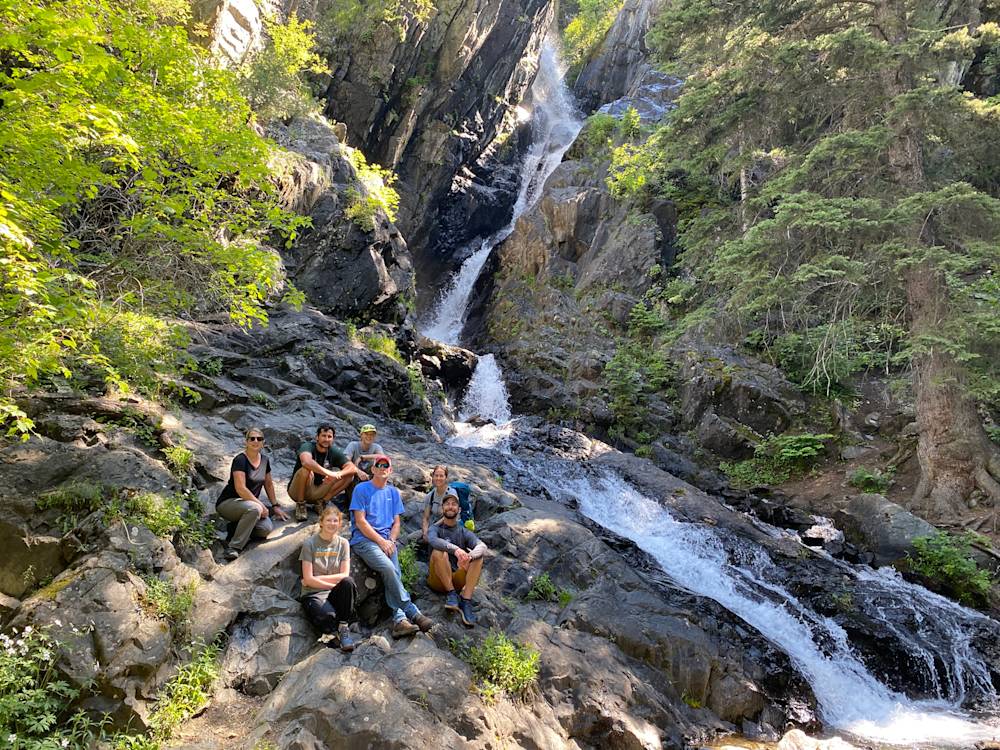
A good family hiking day in Yellowstone is less about checking off the longest trail and more about creating a rhythm that works.
Kids usually do best with variety: a short hike, a wildlife stop, a snack break, a geyser basin, a picnic, and some downtime. Yellowstone makes that easy when you plan by region.
The park is large, so driving time matters. A smart family hiking day usually focuses on one area of the park instead of bouncing between far-apart trailheads.
Best time of year to hike Yellowstone with kids
For most families, June through September is the easiest time to hike in Yellowstone. Roads and services are generally more accessible, days are longer, and trail options are broader.
May and early June: Best for wildlife and waterfalls, but trails may be muddy, snowy, or closed.
Late June through August: Best for broad family access, but busiest. Start early and build in breaks.
September: A wonderful option for cooler temperatures, softer light, and fewer peak-summer crowds.
October: Quieter and beautiful, but more unpredictable. Services, roads, and trail access may be limited.
What should families pack for Yellowstone hikes?
Pack more than you think you’ll need, but keep it manageable. A comfortable daypack can save the day.
Bring:
- Comfortable walking or hiking shoes
- Layers for changing weather
- Rain jacket
- Sun hat, sunglasses, and sunscreen
- Refillable water bottles
- Snacks with kid appeal
- Lunch for longer hikes
- Small first-aid kit
- Binoculars
- Trail map or offline map
- Bear spray and knowledge of how to use it
- Wipes or tissues
- Hand sanitizer
- Extra socks for kids
- Light gloves and warm hats in shoulder seasons
Where should families stay for Yellowstone hiking?
Where you stay should match the trails and sights you most want to experience.
For Old Faithful, Upper Geyser Basin, Grand Prismatic Overlook, Lone Star Geyser, and Fairy Falls, families may want to stay near Old Faithful, Madison, or West Yellowstone.
For canyon-area hikes like Brink of the Lower Falls, Canyon Village is convenient.
For Mammoth, Lamar Valley, Trout Lake, and North Yellowstone hikes, Gardiner, Mammoth, Cooke City, or Silver Gate may make sense.
The main family planning rule is simple: avoid crisscrossing the park every day. Long drives are harder with kids, and wildlife traffic can add time quickly.
Yellowstone hiking safety with kids
Yellowstone is family-friendly, but it is not risk-free. Families should stay on boardwalks, keep kids close in thermal areas, carry bear spray on trails, and give wildlife plenty of space.
For families, that means using binoculars and camera zoom rather than trying to get closer.
Family rule worth repeating: if an animal changes its behavior because of you, you are too close.
Guided vs. independent Yellowstone hiking with kids
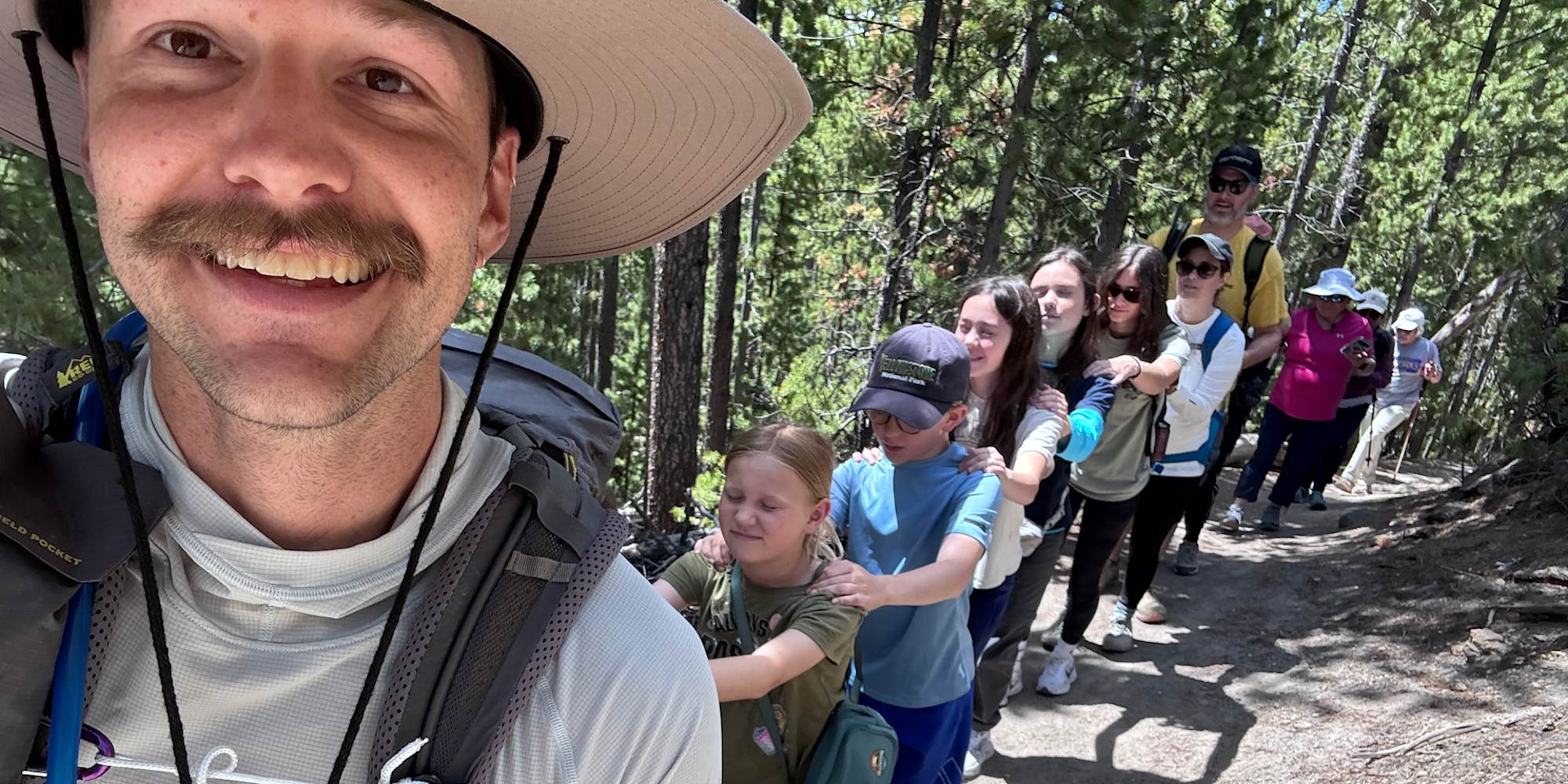
Families can absolutely hike Yellowstone independently. Many popular trails are easy to find, and day hiking does not require a permit. If you enjoy planning, navigating, checking trail conditions, packing gear, managing timing, and adjusting on the fly, independent hiking can be rewarding.
But Yellowstone asks a lot of families.
Someone has to watch the weather. Someone has to know which trail fits the day. Someone has to manage driving, parking, snacks, bathrooms, layers, wildlife safety, and the energy levels of every person in the group.
That’s where guided hiking can make a family trip feel lighter.
On a guided Yellowstone family adventure, you’re not spending every evening comparing trail descriptions or wondering whether tomorrow’s hike is too much. Your guides help shape the day around the weather, the route, the group’s ability, and those little moments families remember most.
Guided Yellowstone family hiking highlights
Local guides who understand the terrain, timing, and conditions
Trail choices matched to age, ability, and season
Support with wildlife and thermal-area safety
Thoughtfully paced days for families and multigenerational groups
Seamless logistics between hiking regions
Comfortable accommodations and planned meals, depending on itinerary
A small-group atmosphere with like-minded travelers
More time enjoying the park and less time managing the details
Guided family hiking is not about removing the adventure. It’s about making room for it.
It means parents can look up from the map. Grandparents can enjoy the moment. Kids can ask questions, spot wildlife, learn why the ground is steaming, and feel like part of the expedition.
And everyone gets to come home with the same story.
So, which Yellowstone hike is best for your family?
The best Yellowstone hike for your family is the one that matches your kids’ ages, energy, curiosity, and comfort level that day.
For a classic first-time view, choose Grand Prismatic Overlook. For easy geyser walking, explore Upper Geyser Basin or West Thumb Geyser Basin. For a quiet nature walk, try Two Ribbons Trail. For a longer family adventure, choose Lone Star Geyser or Fairy Falls. For lake scenery, consider Storm Point. For a short hike with a peaceful payoff near wildlife country, try Trout Lake. For canyon drama, add Brink of the Lower Falls when your family is ready for the climb back up.
Frequently Asked Questions About Hiking Yellowstone with Kids
What is the best Yellowstone hike for kids?
Grand Prismatic Overlook is one of the best Yellowstone hikes for kids because it is relatively short and offers a big scenic payoff. Upper Geyser Basin, West Thumb Geyser Basin, Storm Point, Trout Lake, Lone Star Geyser, Fairy Falls, and Two Ribbons Trail are also strong choices depending on your child’s age, hiking experience, and the season.
Are Yellowstone hikes safe for families?
Yes, many Yellowstone hikes are safe for families when you choose age-appropriate trails and follow park safety rules. Stay on boardwalks in thermal areas, keep children close, carry bear spray on trails, give wildlife plenty of space, and check current trail conditions before hiking.
What are the easiest Yellowstone hikes for young kids?
The easiest Yellowstone hikes for young kids include Upper Geyser Basin boardwalks, West Thumb Geyser Basin, Two Ribbons Trail, and short canyon or overlook walks. These options are flexible, scenic, and easier to shorten if kids get tired.
When is the best time to hike Yellowstone with kids?
The best time to hike Yellowstone with kids is generally June through September, when more trails and services are accessible. July and August offer the warmest weather and easiest family logistics, while September can be cooler and quieter. May and early June can be beautiful but may bring mud, snow, or trail closures.
Do you need a guide to hike Yellowstone with kids?
You do not need a guide to hike Yellowstone with kids, but a guide can make the experience smoother. Guided trips help families choose the right trails, understand wildlife and thermal safety, manage logistics, and enjoy a well-paced itinerary without one parent or grandparent handling every detail.
What should kids bring for Yellowstone hikes?
Kids should bring comfortable walking shoes, layers, rain protection, water, snacks, sun protection, and any personal medications. Families should also carry bear spray, a small first-aid kit, binoculars, and a trail map or offline navigation.
The secret is not doing everything. It’s choosing well.
A great Yellowstone family hiking day might include one trail, one geyser basin, one wildlife stop, one picnic, and one moment where nobody is rushing. Maybe that moment happens beside a lake. Maybe it happens when Old Faithful erupts. Maybe it happens when your child asks a question you never would have thought to ask.
That’s the joy of hiking Yellowstone with kids.
The park is famous from the road, but it becomes part of the family story on foot.
Written by Madeline Miller of Austin Adventures, a guided adventure travel company with decades of experience designing small-group trips in U.S. National Parks and scenic wilderness destinations since 1985.