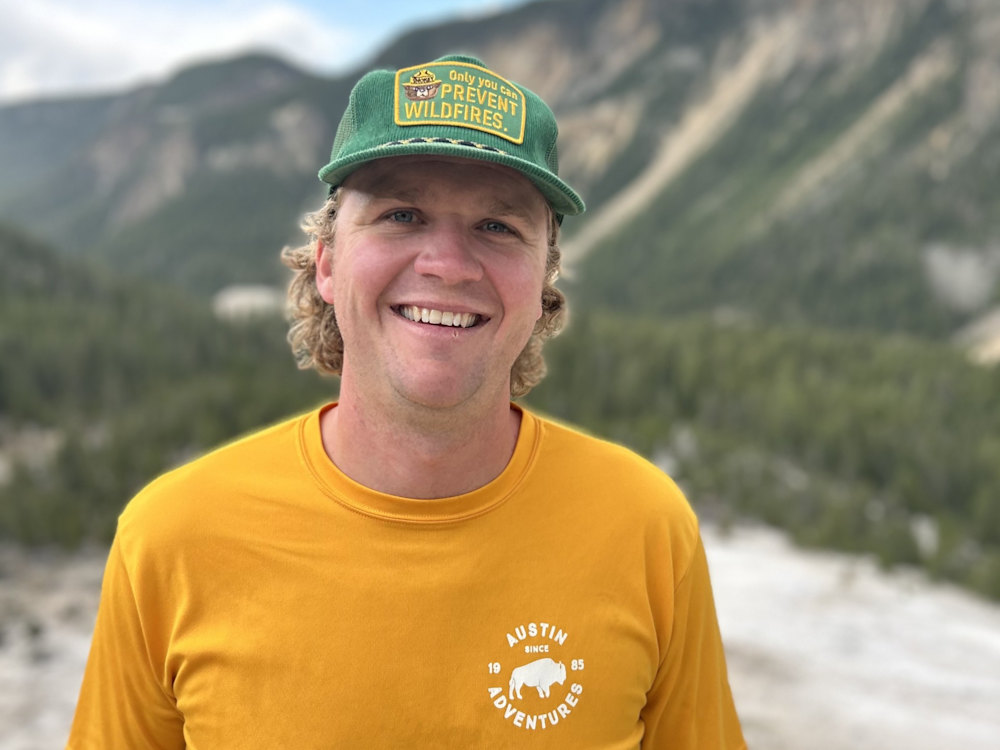
See Yellowstone through a guide’s eyes, where quiet trails, shifting light, and wildlife rhythms reveal a side of the park many visitors miss. David Whayland, an Austin Adventures Guides (and our Guide of the Year 2025!) describes Yellowstone National Park from foggy mornings in the Lamar Valley to the anticipation of scanning distant hills for wolves, and how the magic often lives in the in-between moments. He explains when you begin to understand the landscape, the habits of its animals, the stories behind its valleys, the subtle signs along the trail, every sighting becomes richer and every step through Yellowstone feels more connected to the wild heart of the park.
This deeper connection to place is what transforms a visit into something unforgettable: not just seeing Yellowstone, but truly experiencing it.
Yellowstone, Before the World Wakes Up
The alarm goes off and instead of dread, my eyes shoot open. I remember where I am: Yellowstone National Park. The scent of lodgepole pine drifting through the open window gives it away before I even sit up.
I went to sleep a little warm and woke to that mountain morning chill, Montana’s version of AC, that makes it hard to leave the blankets. Eventually, I do.
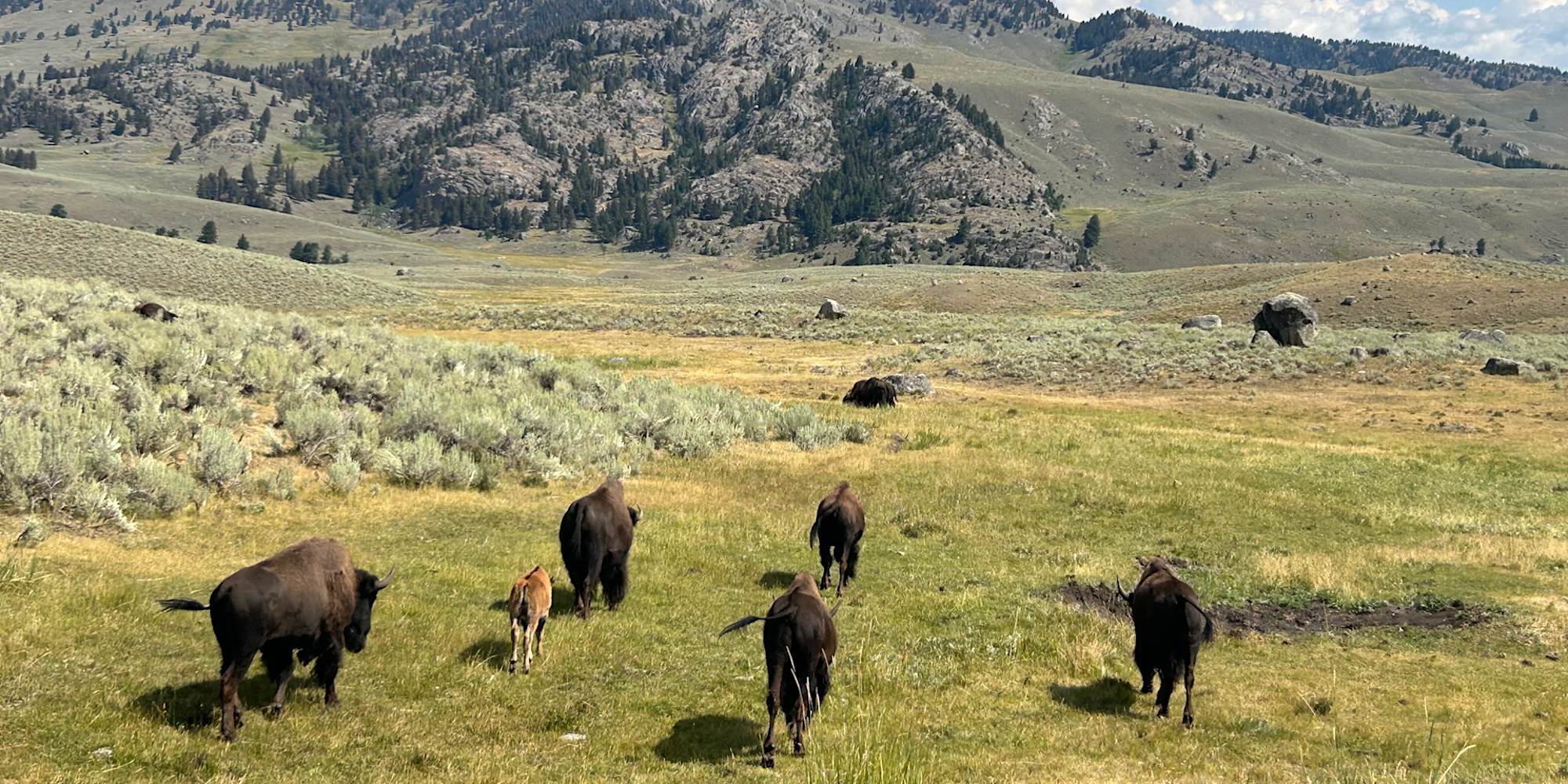
Outside, fog hangs low in the crisp air. Karl, the resident bison who lingers near the hotel like he owns it (which, to be fair, he does), stands quietly in the distance.
I lace up my shoes and start my run just as the sun begins to burn through the clouds.
A Park That Belongs to the Wild
There’s a certain stillness on Yellowstone’s trails at dawn. For a little while, it feels like the park belongs only to the wildlife, and the few of us lucky enough to be awake.
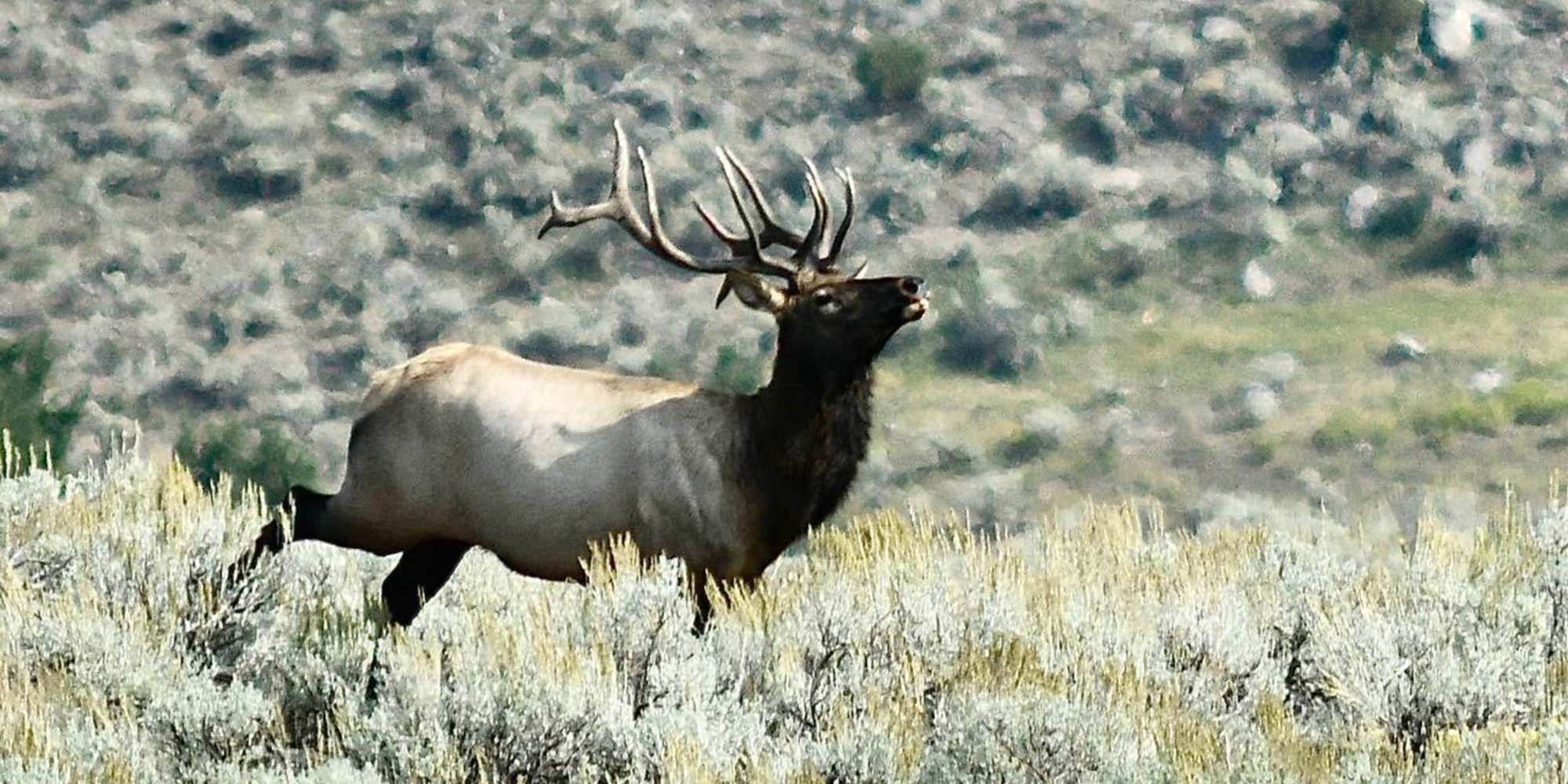
An elk herd grazes in a clearing. A fox darts across the path ahead of me. I scramble down toward a creek where a waterfall spills into a cold, clear pool. I jump in.
That certainly wakes everything up.
Starting the day this way changes how you move through it. You notice more. You slow down. You feel part of the landscape instead of just passing through it.
By the time I pick up the guests, the sun has burned away the last of the fog and Yellowstone is beginning to show itself. I get to hear all about their wanderings around Canyon Village, what they saw, what made them stop, what made them laugh, and most of all, what made them wonder.
My First Glimpse of the Greater Yellowstone Ecosystem
I first arrived here nearly a decade ago, fresh out of college and convinced I had most things figured out.
Driving down Highway 191 through Gallatin Canyon in late spring, snow clung to the peaks while the river surged below the road. Deep green pines, pale limestone cliffs, white summits overhead. It felt like the canyon walls were hugging me while slowly revealing something bigger just around the corner.
Over time, I began to understand what makes this place so extraordinary.
- One of the densest populations of large mammals in North America
- Wolves, bears, elk, and bison moving across a still-functioning ecosystem
- One of the largest active volcanic systems on Earth
- The birthplace of the national park idea
Beneath our feet sits an active volcanic system, responsible for the thermal features that make Yellowstone feel almost like another planet. It is also the place that words like conservation and preservation might call home. As the world’s first national park, if its trees could tell stories, especially the petrified ones, they would have many ballads to sing.
Yellowstone is layered. Geological, ecological, historical. The deeper you look, the more you see.
The Quiet Moments Most People Miss
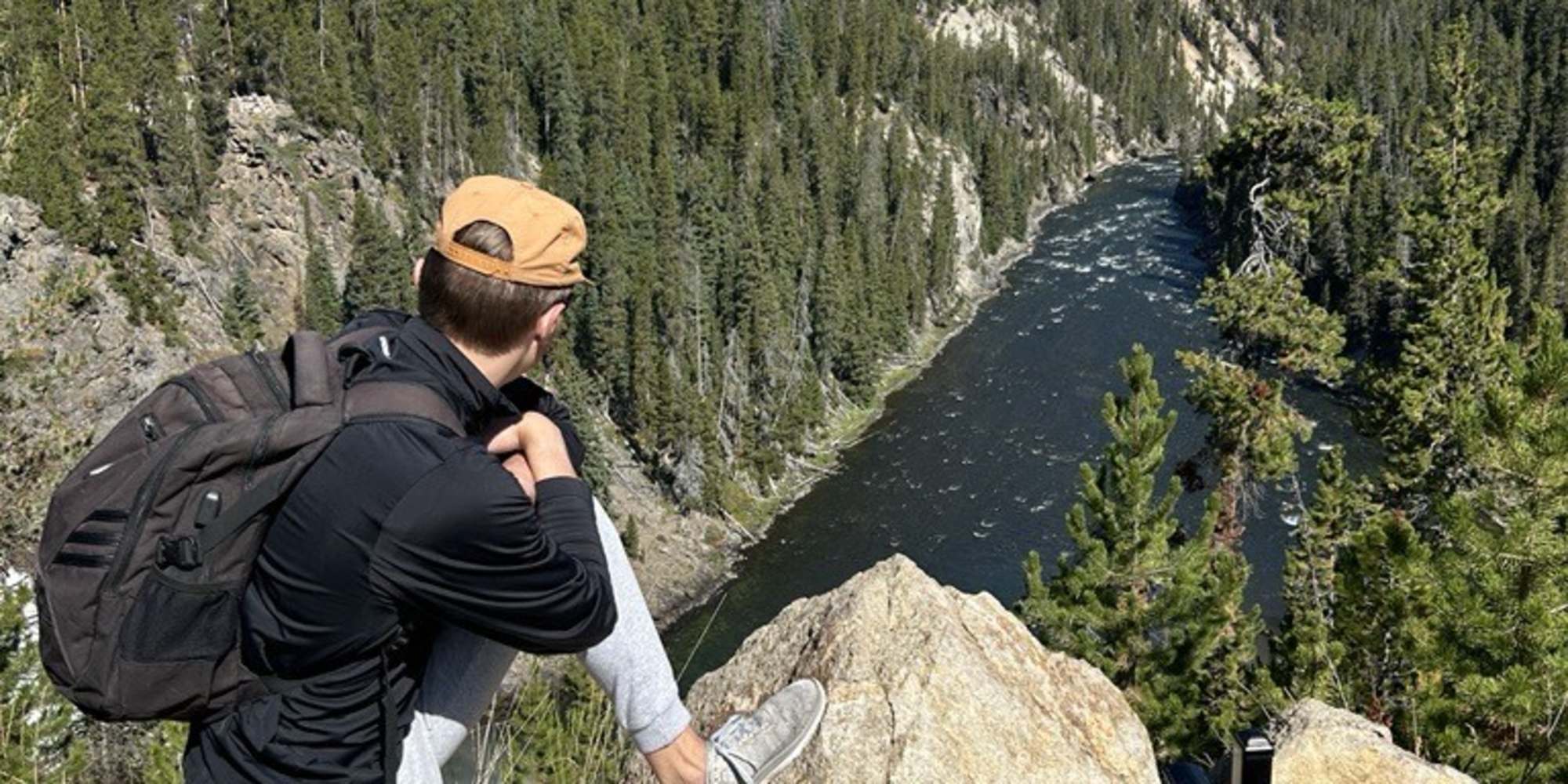
Yellowstone is so much more than a map and a must-see List. People come to Yellowstone for iconic moments:
Old Faithful erupting.
A bison crossing the road.
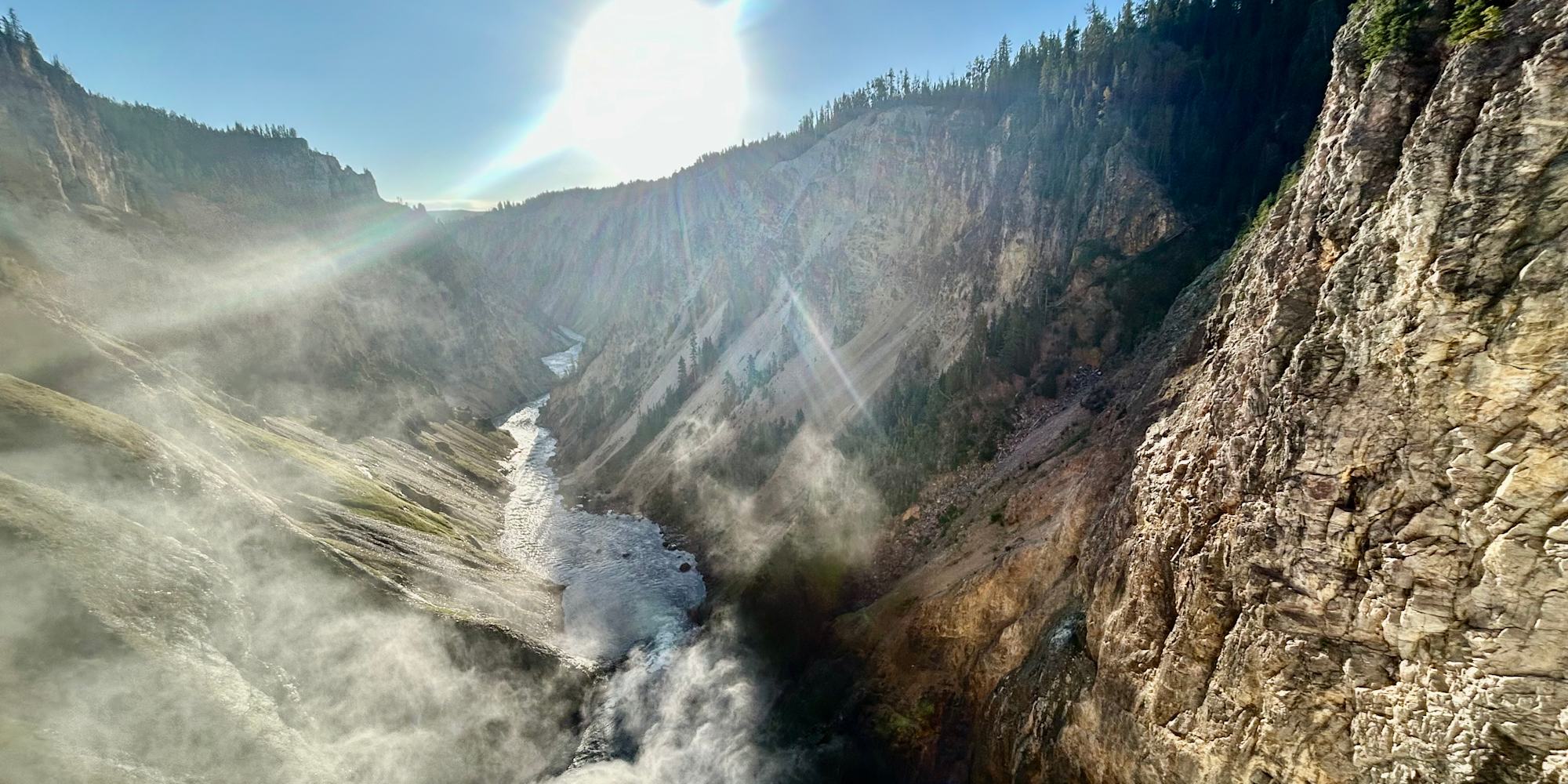
Standing at the edge of the Grand Canyon of the Yellowstone.
And let me tell you, those moments never get old. But the magic often happens in between.
On a quiet stretch of trail. In a meadow that looks ordinary until you kneel down and notice the wildflowers. In a conversation about why the wolves were reintroduced, and how that decision reshaped the entire ecosystem.
What has always stayed with me aren’t just the big landmarks. It’s these quiet moments. The ones that are hard to find as a typical tourist, and moments and events that are hard to unpack without someone there to explain what is really happening. That is something I think about a lot now as a guide.
The ones that are easy to overlook.
The ones that are hard to interpret without context.
The ones that quietly shift how you see the place.
Yellowstone is enormous. Bigger than some states, with more than 1,000 miles of trail. When you first arrive, it can feel overwhelming. Where do you even begin?
That is part of the role I have grown to love as a guide. Over the years, I’ve come to appreciate the rhythm of the park:
- Which trails glow in early light
- Where wildlife tends to move as crowds thin
- How to piece together a day that feels full but never rushed
Sometimes having someone who knows those rhythms simply allows you to settle in and experience the park more fully.
Understanding the “why” deepens the “wow.”
A Wolf Encounter That Changed Me
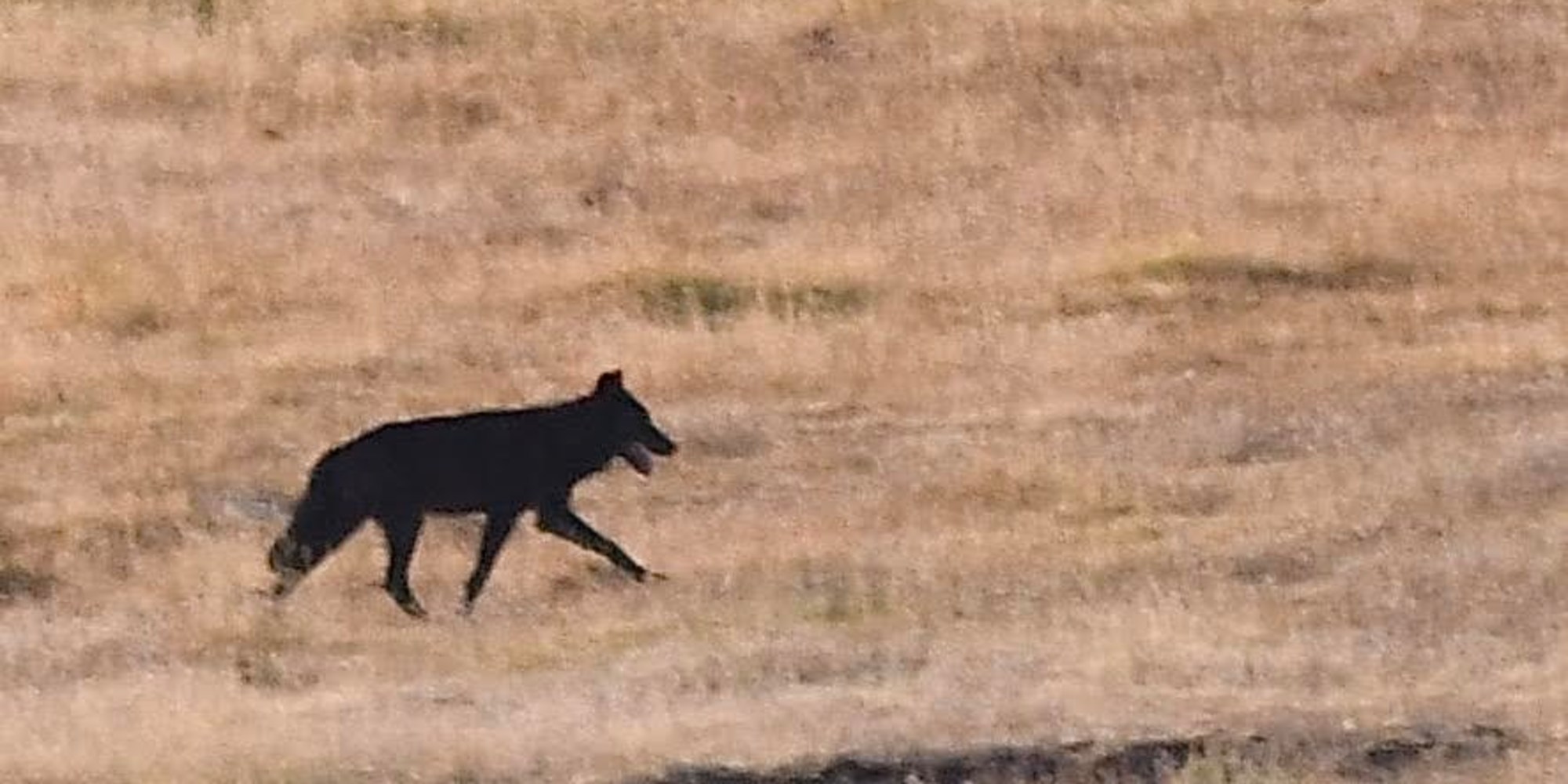
Years ago, I was hiking down from Specimen Ridge toward Lamar Valley as the sun was beginning to drop behind the mountains. I lifted my head and realized I wasn’t alone.
A wolf pack stood scattered across the meadow ahead of me. Some alert. Some resting in the grass. Five, maybe more. We simply existed there together for a moment, neither of us in a hurry to interrupt the evening.
At that time in my life, I wasn’t chasing wolves. I was chasing miles and peaks.
That encounter changed something.
I went home and began reading everything I could about Yellowstone’s wolves, their history, their packs, their role in restoring balance to the ecosystem.
Understanding the story behind what I had witnessed made the experience far richer.
That’s something I think about often. When you understand what you’re seeing, Yellowstone becomes more than scenery.
It becomes a living, breathing system you’re momentarily part of.
The Ease of Letting Someone Else Handle the Details
There’s also something to be said for not having to solve every logistical puzzle yourself.
Yellowstone is vast. Distances are long. Food options can be limited at the wrong time of day. Wildlife doesn’t follow a schedule. Weather changes quickly.
When someone else is keeping an eye on timing, trail conditions, and the small details, you’re free to focus on what you came for:
- The smell of pine in the morning
- The sudden crack of a distant geyser
- Encouraging the sleepy teenager (or perhaps your grumpy partner!) that sunrise might be worth it
By the second or third day, something else tends to happen. The group settles into a rhythm. Conversations stretch a little longer. Shared wildlife sightings turn into shared stories.
By the end of the week, it feels less like a tour moving through a checklist and more like a small traveling community moving through the park together. I always joke with folks that we are not a bus tour, we are a small group van tour, and there is a huge difference.
Discovering What Can’t Be Googled
Today’s hike with the group might be my favorite in the park.
The trail winds through a meadow that makes you want to spin in circles singing “the hills are alive”. It passes Clear Lake, which is anything but clear, then crosses terrain that looks more lunar than earthly. After Lily Pad Lake, there’s a surprise waiting.
And no, I won’t spoil it.
Some things are better discovered in person. Certainly a feeling that anyone who's traveled with Austin Adventures knows; we love our cheeky little surprises ;)
Yellowstone has a way of revealing itself slowly. Not all at once. Not on a schedule. But over time, especially when you know where (and how) to look.
Slowing Down Enough to Let Yellowstone In
If this place has taught me anything, it’s this:
Slow down.
Look closer.
Let the landscape speak.
When you move through Yellowstone with someone to help guide you through it, who has figured out the trails, understands the rhythms, the hidden gems, and the little logistics that make the day seamless, it opens up differently. You get to wander more. You notice more. You ask more questions.
And somewhere along the way, the park shifts from being a destination on a map to something that feels personal. You feel like you belong to something bigger than yourself.
For me, that shift happened more than ten years ago.
And somehow, it still feels like it’s just getting started.
Written by: David Whayland