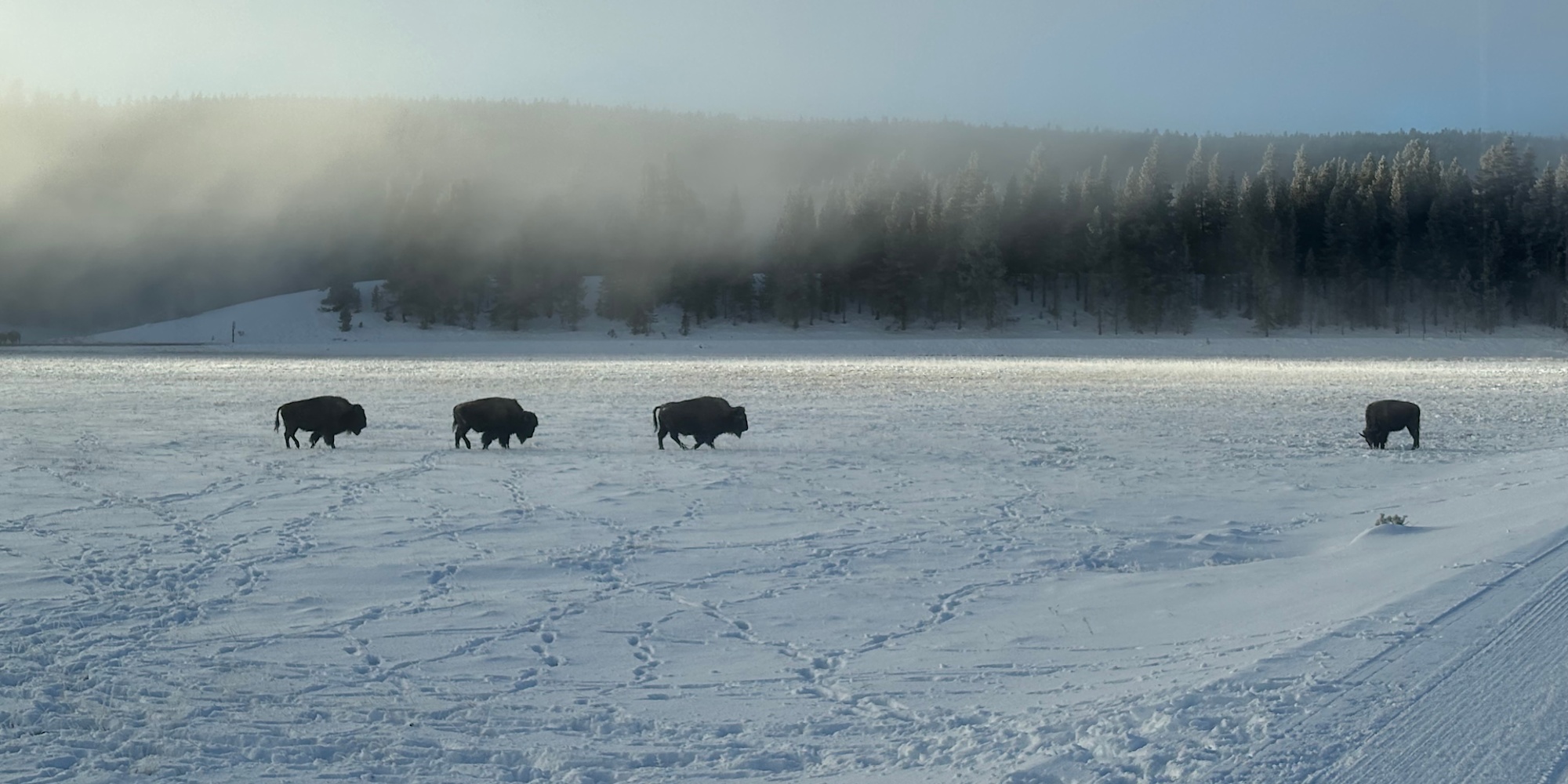
There’s a special kind of quiet that settles over Yellowstone in winter. Snow softens the forests. Bison move slowly through clouds of steam. Geysers erupt into cold blue air. The roads that feel busy in summer become peaceful corridors of white, and the park’s wildness feels close enough to touch.
So, what should you expect on a Yellowstone winter vacation?
Expect a trip that is beautiful, active, cozy, and a little different from the Yellowstone most people know. Winter brings fewer crowds, stronger wildlife-viewing opportunities, dramatic geothermal scenery, and a slower pace - but it also brings cold temperatures, limited services, restricted road access, and the need for smart planning. Most park roads are closed to regular vehicles in winter, while the North to Northeast Entrance road remains open year-round; many interior roads are open only to limited snowcoach and snowmobile travel from mid-December to mid-March.
That’s exactly where a guided trip can make the experience shine. Instead of sorting through road updates, snowcoach access, winter gear, lodging, meals, and activity timing on your own, you can step into a thoughtfully planned adventure with guides who know how to read the day.
With Austin Adventures, Yellowstone in winter becomes wonderfully approachable: private snowcoach travel, snowy boardwalk walks, wildlife watching in Lamar Valley, snowshoeing near Tower Fall and Old Faithful, cozy lodge nights, and a warm soak at Chico Hot Springs in Paradise Valley.
Yellowstone in Winter is Quiet, Snowy, and Worth the Extra Planning
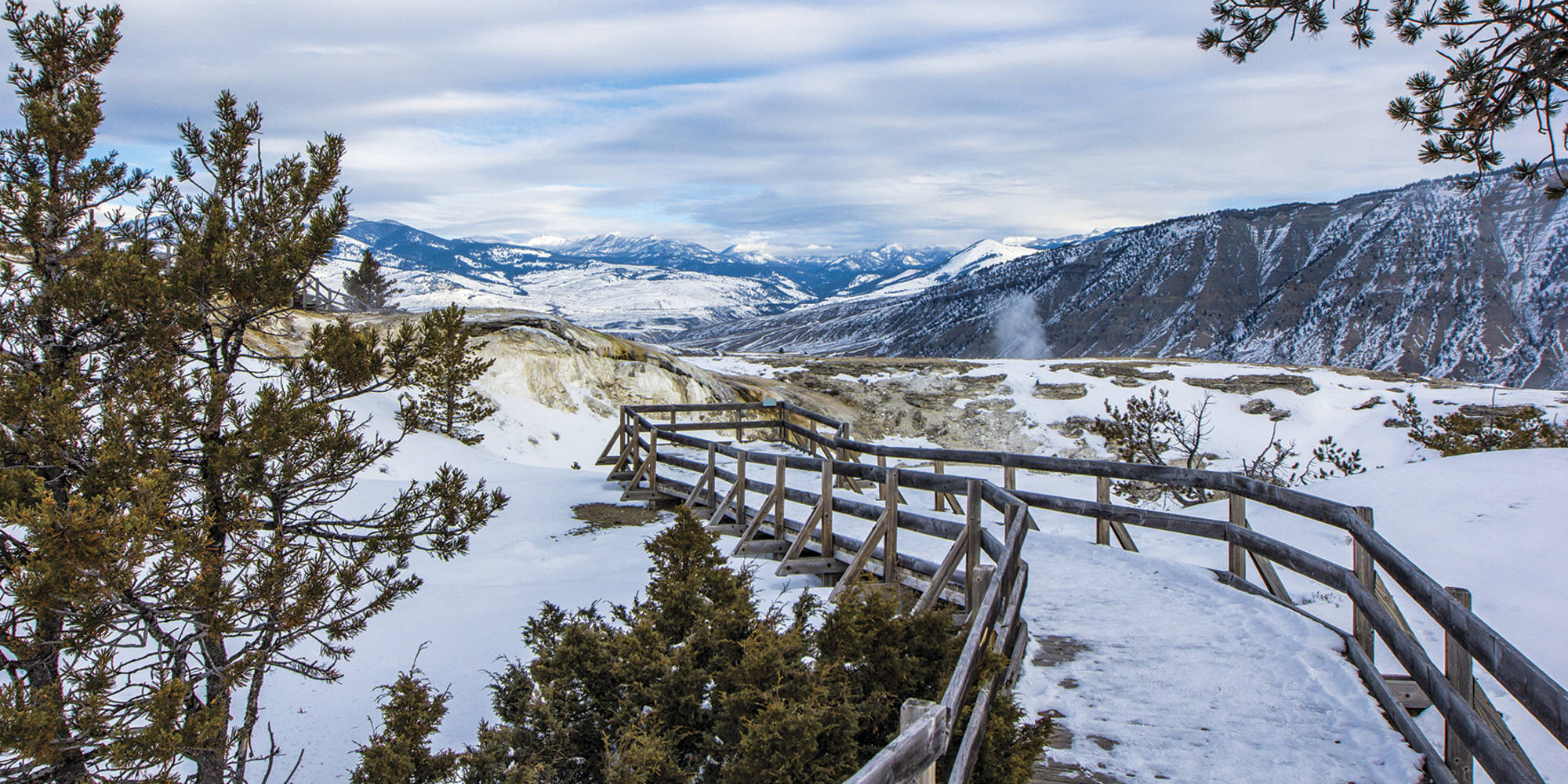
A Yellowstone winter vacation is best for travelers who want a quieter national park experience, excellent wildlife viewing, snowy scenery, and guided access to places that are harder to reach on your own. The park is colder and less accessible than in summer, but that is part of what makes the experience feel so rare.
Winter daytime temperatures in Yellowstone commonly range from 0°F to 20°F, and sub-zero temperatures are common at night and at higher elevations. Visitors should expect snowy and icy conditions, limited cell service, slippery boardwalks near thermal areas, and fewer open services than in peak season.
For many travelers, the reward is well worth it. Old Faithful feels even more dramatic when steam rises into freezing air. Mammoth Hot Springs glows against snow-covered terraces. Lamar Valley becomes one of the best places to watch for wolves, bison, elk, bighorn sheep, coyotes, and other winter wildlife.
If summer Yellowstone is big, bright, and busy, winter Yellowstone is intimate. You notice smaller things: the crunch of snow under your boots, the frost on a lodge window, the hush before a geyser erupts, the collective silence when someone spots movement on a distant ridge.
For first-timers, families, and travelers who prefer a smoother experience, guided travel removes much of the guesswork. Austin Adventures’ Yellowstone winter trips begin and end in Bozeman, run for six days, average 12 guests, and are rated Level 1, making them a strong fit for travelers who want light activity, winter scenery, and expert support rather than a strenuous expedition.
What Can You Do in Yellowstone in Winter?
Yellowstone winter activities are active, scenic, and wonderfully varied. You do not need to be an extreme adventurer to enjoy them, but you do need to be prepared for cold weather and changing conditions.
Ride a private snowcoach to Old Faithful
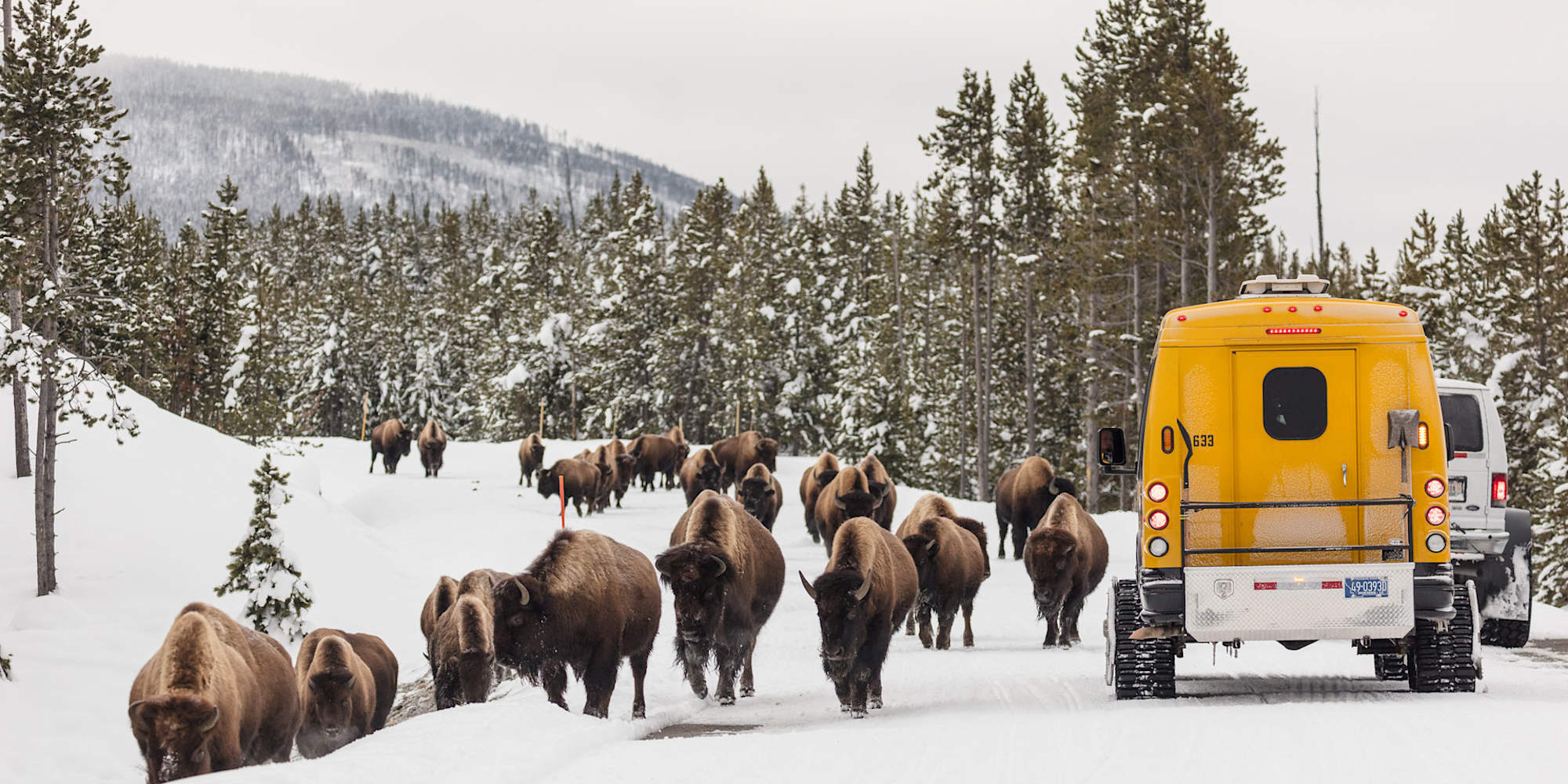
A snowcoach ride is one of the signature Yellowstone winter experiences. Since most interior park roads are closed to regular vehicles, snowcoaches make it possible to travel deeper into the park while staying warm, comfortable, and close to the scenery.
On Austin Adventures’ Yellowstone winter itineraries, a private snowcoach carries guests toward Old Faithful, the Upper Geyser Basin, Grand Canyon of the Yellowstone, Hayden Valley, Lake Yellowstone, and other snowy interior landscapes, depending on route and conditions. Austin’s Yellowstone in Winter Adventure includes private snowcoach travel, snowshoeing around Old Faithful, Mammoth Hot Springs, the Upper Geyser Basin, Lamar Valley wildlife viewing, and a soak at Chico Hot Springs.
Watch geysers and hot springs in the snow
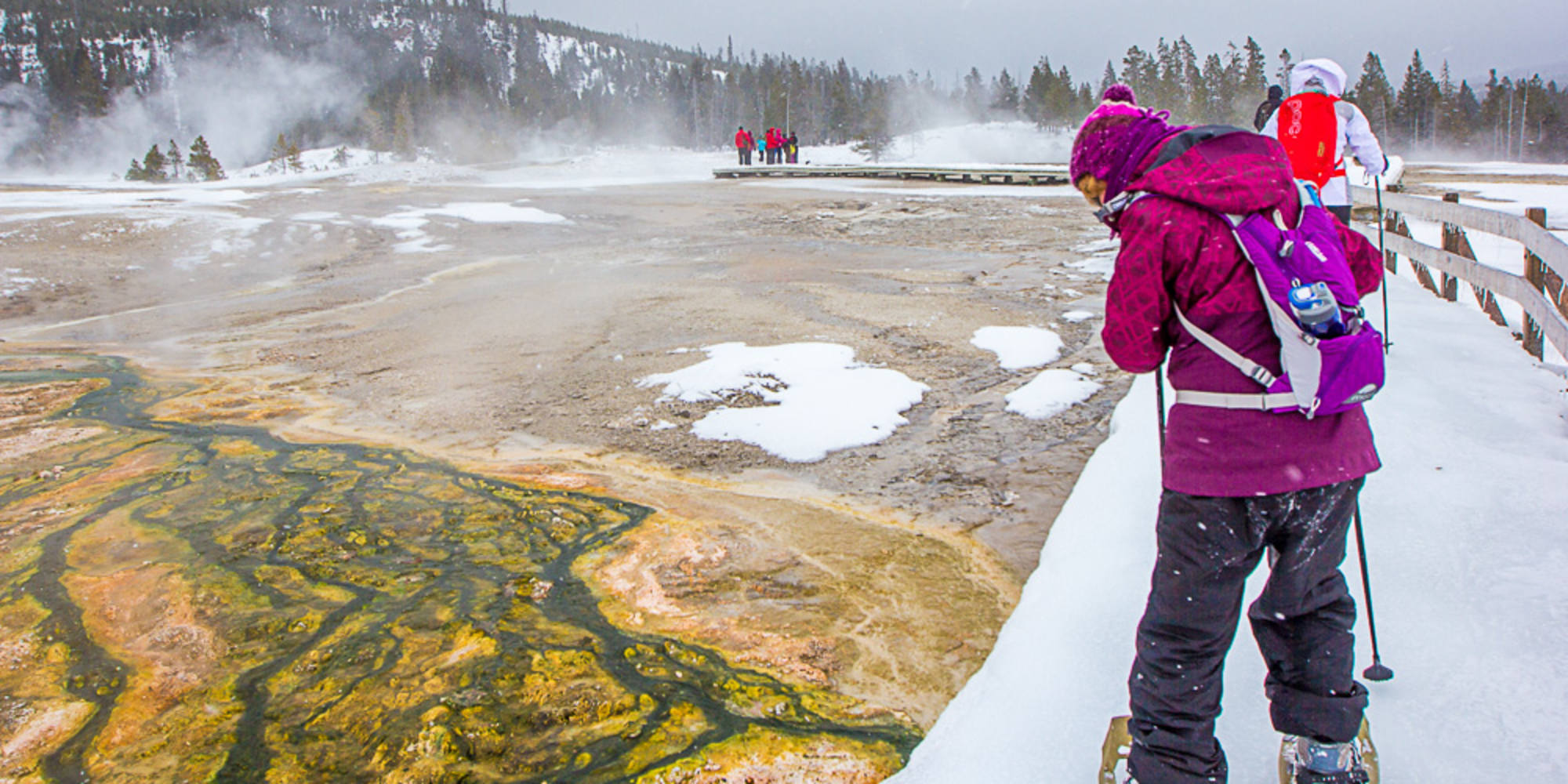
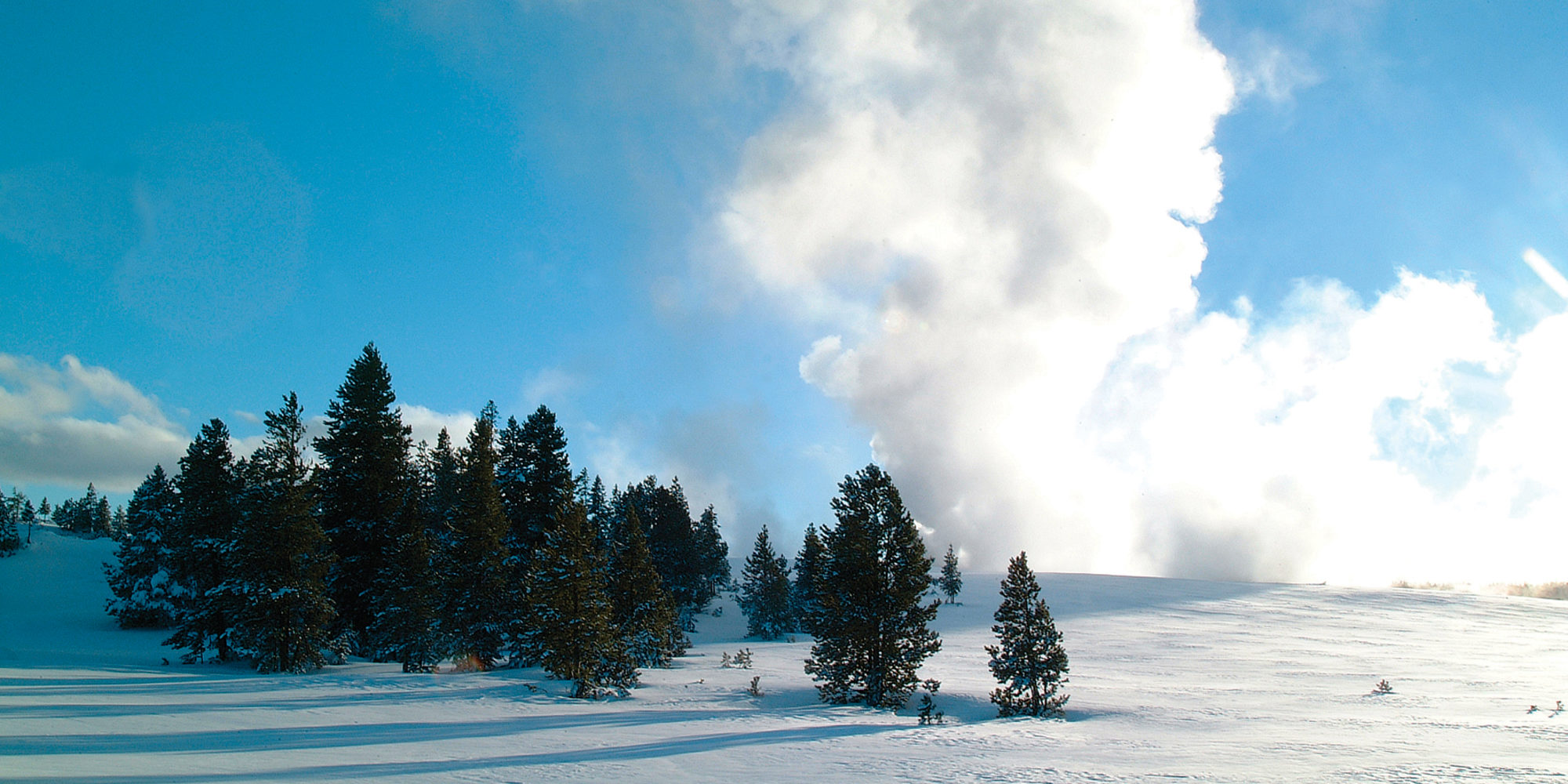
Yellowstone’s geothermal features are spectacular year-round, but winter adds a little theater. Steam billows higher in the cold. Snow frames the boardwalks. Colors feel brighter against the white landscape.
Old Faithful is the classic stop, but the Upper Geyser Basin and Mammoth Hot Springs are just as memorable in winter. At Mammoth, pale travertine terraces, warm mist, and frost-covered trees create one of the park’s most beautiful cold-weather scenes.
Safety matters here. NPS reminds visitors to stay on boardwalks in thermal areas because thin ground and hot water can be dangerous, and snow can hide hazards near thermal features.
Look for winter wildlife in Lamar Valley
Winter is one of Yellowstone’s strongest wildlife seasons. Animals are often easier to spot against the snow, and the Northern Range is especially productive because it remains accessible by automobile year-round. Yellowstone Forever notes that the Northern Range covers 600 square miles along the Lamar and Yellowstone River basins and that Lamar Valley’s open hills make it an ideal place to look for wildlife.
On Austin’s Yellowstone Winter Family Vacation, families start early for sunrise wildlife watching in Lamar Valley, with chances to see bison, elk, moose, bighorn sheep, and sometimes wolves. The early wake-up is part of the adventure - winter mornings are often when the park feels most alive.
Snowshoe or cross-country ski through quiet landscapes
Snowshoeing is one of the easiest ways to feel winter underfoot. If you can walk, you can usually get comfortable on snowshoes quickly. Cross-country skiing adds a bit more rhythm and glide, but both activities help you slow down and experience Yellowstone away from the vehicle.
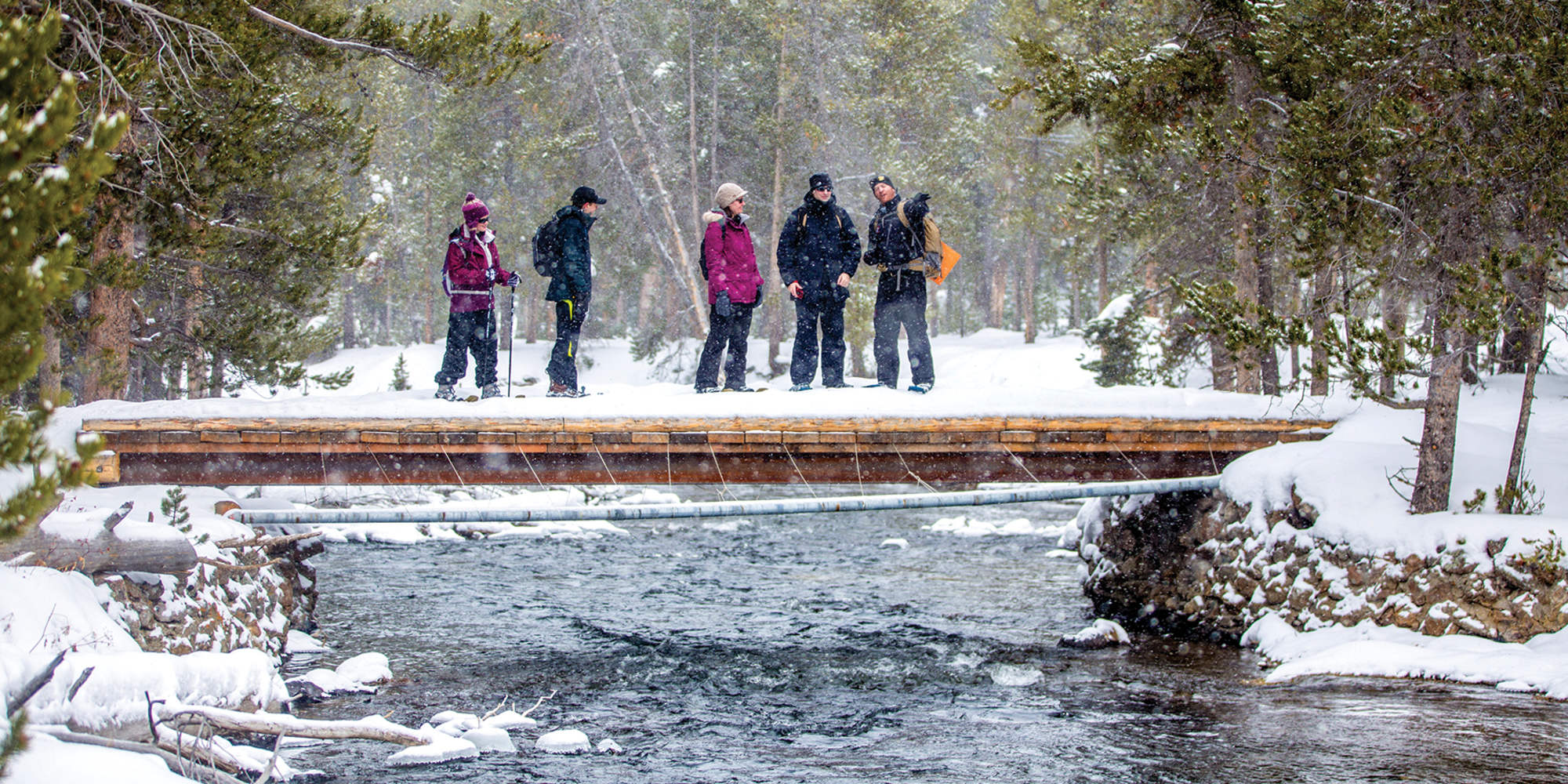
Austin Adventures’ Yellowstone winter trips include snowshoeing or cross-country skiing options around areas such as Old Faithful, Tower Fall, and snowy geyser basin landscapes. These are not designed as extreme winter outings; they are approachable ways to move through the park, stop for photos, and enjoy the stillness.
Warm up in cozy lodges and hot springs
A great winter trip needs warmth built into the rhythm of the day. Austin Adventures’ Yellowstone winter itineraries include cozy lodging in and near the park, with stays such as Mammoth Hot Springs Hotel, Old Faithful Snow Lodge, and Chico Hot Springs Resort depending on itinerary and availability.
After a day of snow, steam, wildlife, and winter air, the simple comforts feel especially good: a hot meal, dry socks, a warm lodge, and the kind of sleep that comes after being outside in a big landscape.
Where Should You Go on a Yellowstone Winter Vacation?
For a first Yellowstone winter vacation, focus on places that deliver the strongest mix of scenery, wildlife, geothermal activity, and winter access.
Bozeman
Bozeman is a practical and welcoming start and end point for many Yellowstone winter trips. Austin Adventures’ Yellowstone Winter Family Vacation and Yellowstone in Winter Adventure both begin and end in Bozeman, which keeps arrival and departure logistics simple for travelers flying in from across the U.S.
Gardiner and the North Entrance
Gardiner sits near Yellowstone’s North Entrance and makes a natural gateway to Mammoth Hot Springs and the Northern Range. Because the North to Northeast Entrance road is the only Yellowstone road open to regular automobiles year-round, this northern corridor is especially important for winter travel.
Mammoth Hot Springs
Mammoth Hot Springs is one of the best first stops in winter. The terraces are beautiful in cold weather, the lodging is convenient, and the area gives travelers a strong first taste of Yellowstone’s geothermal drama. NPS lists Mammoth Hot Springs Hotel as one of the park lodging options open during winter, along with Old Faithful Snow Lodge.
Lamar Valley
Lamar Valley is a must for wildlife lovers. This is where winter can deliver some of the park’s most memorable moments: bison moving through snow, elk grazing in the open, bighorn sheep on rocky slopes, coyotes hunting, and wolves sometimes visible through binoculars or spotting scopes.
Winter wildlife watching takes patience. You may spend time scanning a hillside, waiting in the cold, and listening to your guide explain what to look for. Then, suddenly, the whole valley seems to come into focus.
Tower Fall
Tower Fall adds a classic winter activity stop, especially for snowshoeing. The frozen waterfall, snow-covered forest, and surrounding rock formations make this area feel tucked away and peaceful in winter.
Grand Canyon of the Yellowstone
The Grand Canyon of the Yellowstone is dramatic in every season, but winter gives it a quieter, sharper beauty. Snow settles along the canyon rim, ice forms near the waterfalls, and the colors of the rock feel even richer against the white.
Hayden Valley and Lake Yellowstone
When conditions and snowcoach routes allow, Hayden Valley and Lake Yellowstone add wide-open winter scenery and strong wildlife possibilities. These landscapes are especially rewarding from a snowcoach because the journey itself becomes part of the experience.
Old Faithful and Upper Geyser Basin
Old Faithful is one of the essential Yellowstone winter experiences. In winter, reaching it requires more planning, but that extra effort is part of what makes it feel special. Snowcoach travel, quiet boardwalks, steaming vents, and the eruption itself all come together in one of the park’s most memorable scenes.
Paradise Valley and Chico Hot Springs
Paradise Valley brings a softer, celebratory finish to the trip. Austin’s winter itineraries include time at Chico Hot Springs Resort, where guests can soak in warm mineral waters after several days of exploring Yellowstone’s winter landscapes.
How Hard is a Yellowstone Winter Trip?
A Yellowstone winter vacation is active, but it does not have to be intense. We rate both our Yellowstone Winter Family Vacation and Yellowstone in Winter Adventure as Activity Level 1 trips, with six-day itineraries, fully-guided activities, lodging, meals, transportation, and winter experiences designed around approachable adventure.
That said, winter adds real considerations. Cold temperatures, snow, ice, limited services, and changing road conditions all matter. NPS recommends preparing for winter conditions, wearing traction aids on snowy or icy boardwalks, checking road status before travel, using pullouts rather than stopping in the road, and expecting limited connectivity in the park.
Is Yellowstone in winter good for families?
Yes, with the right itinerary! Yellowstone in winter is wonderful for families because the experience is full of “Did you see that?” moments: bison in the snow, geysers steaming in the cold, snowcoach rides, snowshoe walks, and cozy lodge evenings.
The key is pacing. Kids and adults alike do better when the trip balances outdoor adventure with warmth, meals, flexible timing, and comfortable places to rest. Austin Adventures' Yellowstone Winter Family Vacation is built with a kid-friendly pace and includes private snowcoach travel, snowy boardwalk walks to Old Faithful, snowshoeing or cross-country skiing, hot meals, and cozy lodging.
Who does a Yellowstone winter vacation suit best?
A Yellowstone winter trip is a strong fit for:
- Families who want a memorable national park vacation without summer crowds
- Couples who enjoy wildlife, scenery, and cozy lodge stays
- Multi-generational groups who want a guided, well-paced adventure
- Photographers and wildlife lovers
- Travelers who like snow but do not want an extreme expedition
- First-time Yellowstone visitors who want winter logistics handled
- Return visitors who want to experience a quieter side of the park
It may not be the best fit for travelers who want warm weather, complete driving freedom, or a packed itinerary with every summer viewpoint available.
Guided vs. independent: which is better?
Independent travel can work for experienced winter travelers who enjoy planning every detail, checking road conditions, managing gear, booking snowcoach access, and adapting to changing weather.
Guided travel is the better choice if you want the reassurance of local knowledge, included transportation, pre-planned lodging, activity support, meals, equipment, and a guide team that understands how to adjust the day. In winter Yellowstone, that support can make the difference between a trip that feels complicated and a trip that feels wonderfully smooth.
What Should You Pack for Yellowstone in Winter?
Packing well is one of the simplest ways to enjoy Yellowstone in winter. The weather can be cold, snowy, windy, dry, and bright, sometimes all in the same day. Since winter daytime temperatures commonly range from 0°F to 20°F, with sub-zero temperatures common at night and at higher elevations, warm layers are essential.
Yellowstone Winter Packing List:
- Moisture-wicking base layers
- Warm fleece, wool, or insulated mid-layers
- Waterproof and windproof outer shell
- Insulated winter jacket
- Waterproof winter pants or snow pants
- Warm hat or beanie
- Neck gaiter or buff
- Insulated gloves or mittens
- Glove liners for extra warmth
- Warm wool or synthetic socks
- Insulated waterproof winter boots
- Traction aids for icy boardwalks or paths
- Sunglasses or goggles
- Sunscreen
- Lip balm and moisturizer
- Reusable water bottle
- Small daypack
- Hand and toe warmers
- Binoculars for wildlife viewing
- Camera or phone with extra battery pack
- Personal medications
- Swimsuit for hot springs stops
- Comfortable lodge clothing for evenings
What should be in your daypack?
Your daypack should include water, snacks, an extra warm layer, a waterproof shell, hand warmers, sunscreen, lip balm, sunglasses, personal medication, and a camera or binoculars. Cold weather drains batteries quickly, so keep electronics close to your body when possible and bring a portable charger.
What should you wear for snowshoeing?
Dress in layers rather than one heavy piece. You’ll warm up as you move, then cool down quickly when you stop for photos or wildlife viewing. A moisture-wicking base layer, warm mid-layer, waterproof outer layer, insulated boots, hat, and gloves will keep you more comfortable than bulky cotton clothing.
Cotton is not ideal for winter activity because it holds moisture. Wool and synthetic fabrics are better choices for cold-weather movement.
Let winter show you a quieter side of Yellowstone
Yellowstone in winter asks a little more from you. More layers. More flexibility. More willingness to let the weather shape the day.
But it gives so much back.
You might watch Old Faithful erupt while snow lines the boardwalks. You might stand quietly in Lamar Valley as your guide points out wolves moving across a distant ridge. You might snowshoe through a forest where the only sound is your own breath and the soft press of snow beneath your feet.
Then, at the end of the day, you come inside. There’s a warm meal, a cozy room, and the happy tiredness that only comes from being out in the world in a real way.
That is the gift of a Yellowstone winter vacation. It is not just about seeing the park with fewer people. It is about feeling Yellowstone differently: quieter, wilder, and somehow even more alive.
Written by Madeline Miller, part of the Austin Adventures team, with insight from a company that’s been creating guided adventure vacations in our National Parks since 1985.
Explore Yellowstone in Winter with us here at Austin Adventures!